By Inteledoc Expert Team | 10 min read | Dr. Naveen Satija, MBBS, FIAGES, DNB (Surgery)
You did not gain pregnancy weight because you were careless. And you are not keeping it because you are lazy. Your body went through one of the most profound biological transformations a human being can experience — and it is responding to that transformation in ways that are entirely logical from a survival standpoint, even when they feel frustrating from a personal one. Understanding why your body holds on to weight after delivery is the first step to losing it safely, effectively, and without fighting your own biology.
What Is Actually Happening Inside Your Body After Delivery
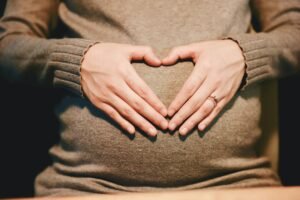
The moment your baby is born, your hormonal landscape shifts dramatically. Oestrogen and progesterone — which were at extraordinary levels during pregnancy — drop sharply within hours of delivery. Prolactin rises significantly if you are breastfeeding, driving milk production. Oxytocin surges to support bonding and uterine contraction. Cortisol climbs in response to the physical stress of labour and the psychological intensity of new parenthood.
Each of these hormonal changes has direct, measurable consequences for how your body stores and releases fat. Oestrogen’s sharp drop temporarily alters how fat cells respond to metabolic signals. Elevated prolactin during breastfeeding signals the body to protect fat stores as energy insurance for milk production. Elevated cortisol — worsened significantly by the sleep deprivation that comes with a newborn — actively promotes fat storage, particularly around the abdomen, while simultaneously elevating ghrelin (the hunger hormone) and suppressing leptin (the fullness hormone).
This is not your body failing you. It is your body executing a biological programme designed over millions of years to protect a nursing mother and her infant. The problem is that this programme has not caught up with modern life — where food is not scarce, where weight gain has its own consequences, and where new mothers are expected to recover while also returning to demanding professional and personal lives. The biology is working as designed. The context has changed.
✗ THE MOST HARMFUL MYTH IN POST-DELIVERY WEIGHT LOSS
Women who cannot lose their pregnancy weight within a few months simply lack discipline. If they ate less and exercised more, the weight would come off just like anyone else's.
Research published in the American Journal of Clinical Nutrition found that post-partum hormonal environment — specifically prolactin levels during breastfeeding and cortisol levels from sleep deprivation — independently predicted weight retention at six months post delivery, regardless of caloric intake. Women with higher prolactin and cortisol retained significantly more weight even when consuming the same calories as those who lost weight faster. The biology matters more than the discipline in the early post-delivery period. Any approach that ignores this fact will consistently produce frustration and failure.
What Safe, Effective Weight Reduction Post Delivery Actually Looks Like
The Right Timeline
Weeks one to six are for recovery — not weight loss. Your body is healing from one of the most physically demanding events it will ever go through. Attempting aggressive weight loss during this period is not just ineffective — it actively impairs healing, disrupts milk supply if breastfeeding, and depletes the nutritional reserves your body is drawing on for recovery. Gentle walking, adequate nutrition, and rest are the clinical priorities in this phase.
From month three onward, with medical clearance and a properly designed programme, weight reduction post delivery becomes safe and achievable. The goal is 0.5 to 0.75 kilograms per week — a rate that protects milk supply, preserves muscle mass, and avoids triggering the metabolic adaptation that slows future weight loss.
Nutrition That Works With Your Biology — Not Against It
The single most impactful nutritional change a new mother can make is prioritising protein at every meal. Protein at 1.2 to 1.5 grams per kilogram of body weight daily supports tissue repair, preserves the muscle mass that keeps your metabolic rate healthy, and produces genuine, sustained satiety — reducing the biologically driven hunger that sleep deprivation creates. Dal, paneer, curd, eggs, legumes, and seeds are the protein foundations of an effective post-delivery diet in an Indian context.
Beyond protein, blood sugar stability is the most practical tool for managing post-delivery cravings. Including fibre — vegetables, whole dals, whole grains — with every meal slows glucose absorption and prevents the dramatic energy crashes that drive reaching for biscuits, chai with sugar, and other comfort snacks. Eating every three to four hours rather than skipping meals maintains blood sugar stability and prevents the cortisol spike that fasting triggers.
Movement That Restores, Not Exhausts
Exercise post delivery should be approached with clinical precision, not Instagram enthusiasm. Walking — twenty to thirty minutes daily from the first weeks post delivery — is safe, effective, and produces measurable cortisol reduction. After six-week clearance, core rehabilitation (not abdominal crunches — targeted deep core work to restore pelvic floor and transverse abdominal function) is the clinical priority. Resistance training — bodyweight squats, modified push-ups, resistance band work — is introduced progressively from month two or three and forms the cornerstone of metabolic rate preservation during weight loss. High-intensity exercise should be introduced only after full physical recovery and not before four to six months post delivery for most women.
✓ WHEN TO SEEK DOCTOR-SUPERVISED SUPPORT
If you are six months or more post delivery and weight is not moving despite genuine, sustained effort — a medical assessment is the right next step. Post-partum thyroiditis, persistent insulin resistance, iron deficiency, and vitamin D deficiency are all common and all directly impair weight loss. Inteledoc's doctor-supervised programme begins with a metabolic assessment that identifies these factors and builds a programme specifically around your post-delivery biology. Read about our doctor-supervised approach here.
The Post-Delivery Conditions That Require Medical Attention
Post-partum thyroiditis affects approximately 10% of women after delivery — causing temporary thyroid dysfunction that directly produces weight retention, fatigue, hair thinning, and mood changes. It is frequently missed because its symptoms overlap with normal newmother exhaustion. Iron deficiency anaemia — extremely common post delivery due to blood loss during birth — causes fatigue and reduced metabolic efficiency. Vitamin D deficiency, prevalent across India, impairs insulin sensitivity and fat metabolism. None of these are diagnosable without blood work. All of them are completely treatable. And all of them can be the reason genuine dietary effort is producing no weight loss results.
Inteledoc’s initial metabolic assessment specifically screens for each of these — identifying the biological factors that are working against your weight reduction post delivery and building a programme that addresses them directly. Book your assessment here.
Frequently Asked Questions
Most women lose five to seven kilos in the first week post delivery — the weight of the baby, placenta, amniotic fluid, and initial water retention release. This is not fat loss. Do not use this as a benchmark for the weeks and months that follow. Fat loss begins gradually thereafter and follows a much slower, biology-dependent timeline.
Severe caloric restriction post delivery typically triggers metabolic adaptation — your body reduces its resting metabolic rate to match the reduced intake, making further weight loss increasingly difficult. Simultaneously, very low calorie intake can elevate cortisol and reduce thyroid hormone output — both of which further slow fat loss. If you are eating very little and not losing weight, the answer is almost certainly not to eat even less. It is to eat more any biological factors at play. strategically — prioritising protein and fibre — while getting a medical assessment to identify
Severe caloric restriction post delivery typically triggers metabolic adaptation — your body reduces its resting metabolic rate to match the reduced intake, making further weight loss increasingly difficult. Simultaneously, very low calorie intake can elevate cortisol and reduce thyroid hormone output — both of which further slow fat loss. If you are eating very little and not losing weight, the answer is almost certainly not to eat even less. It is to eat more any biological factors at play. strategically — prioritising protein and fibre — while getting a medical assessment to identify
At six months post delivery, if genuine dietary and lifestyle effort is not producing results, a medical assessment is strongly advisable. Post-partum thyroiditis, insulin resistance, nutritional deficiencies, and persistent hormonal disruption are all common at this stage and all directly impair weight loss. An Inteledoc metabolic assessment will identify which factors are at play and design a programme specifically addressing them. Book here.
Intermittent fasting — particularly extended fasting windows — is generally not recommended during active breastfeeding. Prolonged fasting can reduce milk supply, elevate cortisol, and leave a breastfeeding mother nutritionally depleted. A moderate approach — eating within a twelve-hour window, avoiding late-night eating — is safer and more sustainable than structured fasting protocols during the breastfeeding period. Q6. When can I safely start exercising after.
Walking can typically begin within one to two weeks of C-section delivery in uncomplicated cases. More structured exercise — including core work and resistance training — should wait until six to twelve weeks post C-section, depending on healing, and must be cleared by your obstetrician. Inteledoc’s post-delivery programme accounts for delivery type in all exercise recommendations.
For women whose weight retention has been significantly influenced by elevated prolactin during breastfeeding, yes — weight loss often accelerates after weaning. But this is not universal. Women who have persistent metabolic factors — insulin resistance, thyroid issues, ongoing cortisol dysregulation — will not automatically lose weight after stopping breastfeeding without a targeted approach.
High-protein options: dal of all varieties, paneer, curd, eggs, rajma, chana, moong. High-fibre options: sabzi with skin, methi, palak, lauki, karela, whole grain roti. Blood-sugar stabilising options: whole dals eaten with sabzi before rice, curd as accompaniment. Foods to reduce: white rice in large portions alone, maida-based breads, biscuits, sweetened chai, packaged snacks. An Inteledoc dietician builds a fully personalised Indian-appropriate post-delivery diet plan around your specific metabolic findings.
GLP-1 medicines including semaglutide and tirzepatide are contraindicated during breastfeeding. They should not be used while actively nursing your baby. For women who have completed breastfeeding and are dealing with persistent post-delivery weight retention — particularly where insulin resistance is a factor — GLP-1 treatment may be considered under medical supervision. Your Inteledoc doctor will assess this individually. Read our guide to weight loss injections here.
Inteledoc begins with a full metabolic assessment — identifying thyroid function, hormonal status, insulin sensitivity, iron levels, and nutritional gaps specific to your post-delivery biology. The programme is designed around your individual findings, your breastfeeding status, your delivery type, and your practical daily life. It is a doctor-supervised clinical programme — not a template. See programme plans here.
Ready to start your doctor-supervised weight loss journey?
Inteledoc — A Doctor-led, metabolonomics-informed medical weight loss program personalized to your unique metabolic profile. Online & in-person in Gurugram. Plans from ₹1,500/month.
Book a consultation