By Inteledoc Expert Team | 10 min read | Medically reviewed by Dr. Nitin Jain, MBBS, MD EDIC — Inteledoc Medical Advisory Team
GLP-1 medications have changed the way obesity and weight management are approached. Medicines such as semaglutide and other GLP-1-based therapies can help eligible patients reduce appetite, improve feelings of fullness and support clinically meaningful weight loss when used as part of a comprehensive treatment plan.
But one question comes up frequently:
What happens when you stop taking a GLP-1 medication?
The answer is not the same for everyone. However, research shows that some people regain a significant amount of the weight they lost after stopping treatment. This does not necessarily mean that the medication “failed.” Rather, it highlights an important fact about obesity: it is a chronic condition that may require ongoing management.
The World Health Organization now describes GLP-1 therapies as one component of comprehensive, long-term obesity care rather than a standalone solution.
How Do GLP-1 Medications Support Weight Loss?
GLP-1 is a naturally occurring hormone involved in appetite and blood glucose regulation.
GLP-1-based medications can influence several processes related to eating and metabolism. Depending on the medicine, they can:
- Reduce appetite
- Increase feelings of fullness
- Slow gastric emptying
- Help regulate blood glucose
- Support reduced food intake
Because of these effects, some people find it easier to follow a structured nutrition plan and maintain a calorie deficit while taking the medication.
However, GLP-1 medication is not simply a “fat-burning injection.” Its role is better understood as part of a broader medical approach to managing obesity.
What Happens After Stopping GLP-1 Medication?
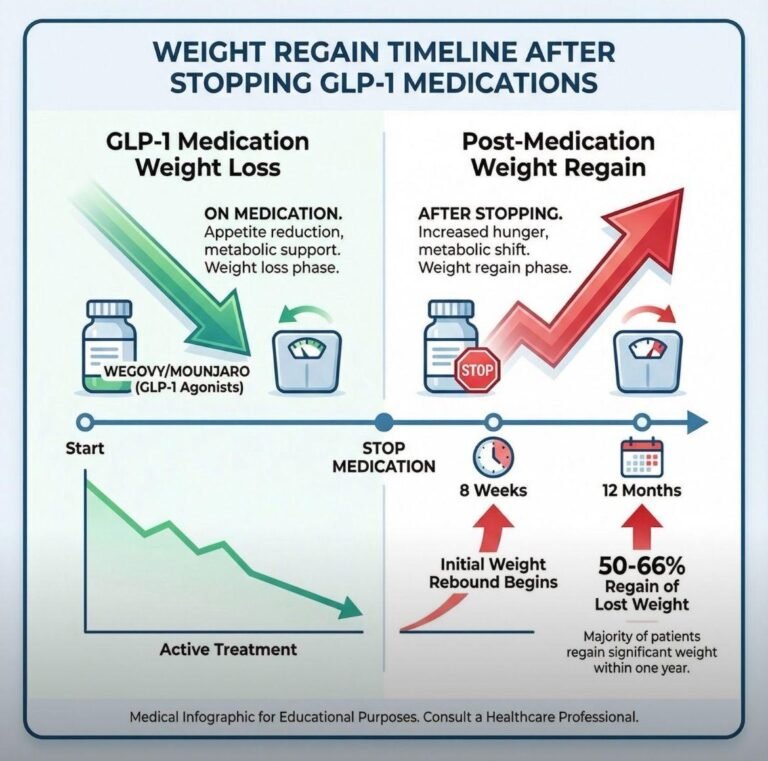
When treatment is stopped, the effects of the medication gradually wear off.
Appetite may increase again, feelings of fullness may change and maintaining the same eating pattern can become more difficult for some people.
Clinical research has demonstrated that weight regain can occur after stopping treatment.
In the STEP 1 extension study, participants who had taken semaglutide for 68 weeks and then stopped treatment regained a substantial portion of the weight they had previously lost during the following year. At week 120, participants had regained approximately two-thirds of their previous weight loss on average.
This is one reason healthcare professionals increasingly consider obesity treatment as a long-term management process rather than a short-term weight-loss program.
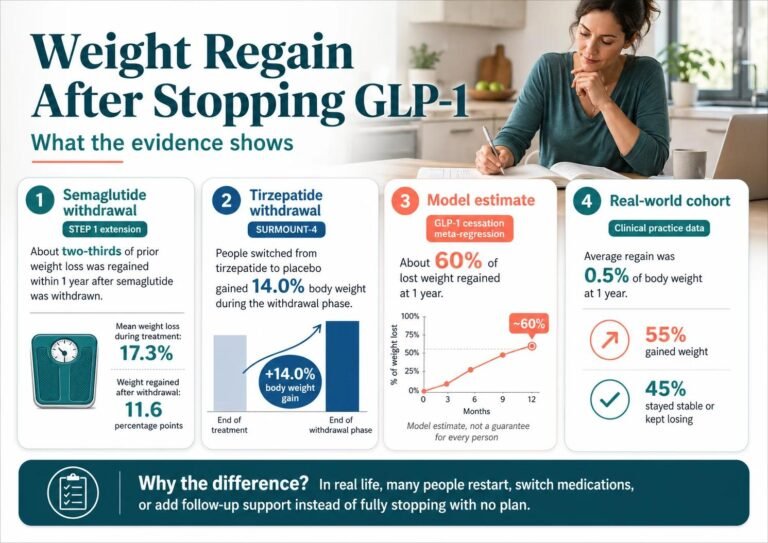
Does Everyone Regain Weight After Stopping GLP-1?
No.
Individual responses vary.
Some people may maintain a significant portion of their weight loss, while others may experience more substantial weight regain. Factors that can influence weight maintenance include:
- Eating habits
- Physical activity
- Sleep
- Metabolic health
- Underlying medical conditions
- Duration of treatment
- Amount of weight lost
- Individual response to treatment
- Ongoing professional support
Therefore, stopping a GLP-1 medication should not be treated as a one-size-fits-all decision.
Why Can Weight Regain Happen?
Weight regulation involves complex biological, behavioral and environmental factors.
After significant weight loss, the body can respond with changes in appetite and energy regulation. If the appetite-suppressing effects of medication are removed, maintaining the same level of food intake may become more difficult.
This is one reason why long-term weight management often requires more than simply reaching a target number on the weighing scale.
A successful treatment plan should also focus on maintaining healthy eating patterns, physical activity and other factors that support metabolic health.
WHO recommends combining GLP-1 treatment with structured behavioral interventions that include healthy eating and physical activity.
Is GLP-1 Treatment a Lifetime Treatment?
There is no single answer for every patient.
The appropriate duration of treatment depends on the individual’s health status, response to treatment, goals, risks and medical assessment.
WHO’s current guidance recognizes obesity as a chronic disease and states that GLP-1 therapies may be used as a long-term treatment option for adults living with obesity, while also noting uncertainties around long-term treatment, maintenance and discontinuation.
This means the decision to continue, reduce or stop medication should be made with a qualified healthcare professional rather than based only on reaching a particular weight.
How Can You Reduce the Risk of Weight Regain?
There is no guaranteed way to prevent weight regain, but several strategies can support long-term weight management.
1. Follow a structured nutrition plan
A sustainable eating pattern is more useful for long-term management than extreme dieting.
Focus on adequate protein, vegetables, fruits, whole foods, appropriate portions and overall nutritional quality.
2. Stay physically active
Regular physical activity can support energy balance, muscle health and overall metabolic health.
A combination of resistance training and aerobic activity may be included depending on the individual’s health and fitness level.
3. Monitor your weight and health
Regular monitoring can help identify changes early.
Healthcare professionals may also monitor factors such as blood glucose, blood pressure, body composition and other relevant health markers depending on the patient’s situation.
4. Address the reasons behind weight gain
Weight management is not only about food intake.
Sleep, stress, medications, hormonal conditions, metabolic health and other medical factors can influence body weight.
Identifying these factors can make a long-term plan more appropriate and sustainable.
5. Don't stop medication without medical guidance
If you are considering stopping a GLP-1 medication, speak with your prescribing healthcare professional first.
Your doctor can assess your progress and determine whether continuing treatment, changing the treatment approach or transitioning to another strategy is appropriate.
Can Lifestyle Changes Replace GLP-1 Medication?
Lifestyle remains an important part of weight management whether or not medication is used.
However, medication and lifestyle changes should not necessarily be viewed as competing approaches.
For some people with obesity, GLP-1 therapy may make appetite management easier while nutrition, physical activity and behavioral support help build sustainable habits.
WHO specifically recommends structured behavioral interventions alongside GLP-1 therapy rather than relying on medication alone.
Who Should Consider GLP-1 Treatment?
GLP-1 medications are not suitable for everyone.
According to current WHO guidance, GLP-1 therapies may be considered as a long-term treatment option for adults living with obesity, with treatment decisions based on individual clinical circumstances. They should be prescribed and monitored by qualified healthcare professionals.
A medical assessment may consider:
- BMI and weight history
- Existing medical conditions
- Current medications
- Metabolic health
- Previous weight-management attempts
- Treatment goals
- Potential risks and contraindications
Pregnancy is an important consideration, and WHO’s obesity guideline does not cover the use of these medicines in pregnant women.
What Are the Common Side Effects?
GLP-1 therapies can cause gastrointestinal side effects.
Commonly reported effects include:
- Nausea
- Vomiting
- Constipation
- Diarrhea
These effects may be more noticeable when treatment is started or doses are changed. More serious gastrointestinal and other adverse effects have also been reported, which is why medical supervision is important.
Anyone experiencing concerning or persistent symptoms should contact their healthcare professional.
GLP-1 Weight Loss Should Be Viewed as Long-Term Care
One of the biggest misconceptions about GLP-1 treatment is that the medication simply needs to be taken until a target weight is reached and then everything will remain unchanged.
Research suggests that weight regain can occur after treatment withdrawal.
A better approach is to think about weight management as an ongoing process.
The goal is not only to lose weight but also to understand the factors contributing to weight gain, improve metabolic health where appropriate and develop a sustainable plan for maintaining progress.
GLP-1 Weight Loss Treatment in India
Interest in GLP-1-based weight management has grown rapidly in India, but medication should not be selected solely because it is popular online.
A medically supervised approach can help determine whether GLP-1 treatment is appropriate based on an individual’s health profile and weight-management goals.
At Inteledoc, the focus is on personalized, doctor-guided weight management rather than treating weight loss as a one-size-fits-all process.
If you are considering GLP-1 treatment, speak with a qualified healthcare professional to understand whether it is appropriate for you and what a long-term treatment strategy may look like.
Frequently Asked Questions
Yes. Research has shown that some people regain a significant portion of lost weight after stopping GLP-1 treatment. The amount of regain varies between individuals.
Not necessarily. The appropriate duration of treatment depends on your individual health situation and should be discussed with your healthcare professional.
No. Weight regain after stopping treatment does not mean the medication was ineffective. It can reflect the chronic nature of obesity and the body’s ongoing regulation of appetite and weight.
Healthy eating, regular physical activity and ongoing behavioral support can contribute to long-term weight management. WHO recommends these measures alongside GLP-1 therapy.
No. GLP-1 medicines are prescription treatments and are not appropriate for everyone. A healthcare professional should assess your medical history and individual risks before treatment.
Whether treatment should be restarted depends on your individual circumstances. This decision should be made with a qualified healthcare professional rather than without medical supervision.
Explore Inteledoc
Doctor-led weight management with online consultations across India.
Book a consultation