
Fatty Liver & Weight Management

Fatty Liver and Weight Management Program in India: Doctor-Led Metabolic Health Support

Support Your Liver Health With a Personalized Weight Management Approach

Fatty liver is increasingly recognized as an important metabolic health concern. It can occur when excess fat accumulates in the liver and may be associated with obesity, insulin resistance, type 2 diabetes and other metabolic risk factors. Many people discover it during a routine health check-up or ultrasound — and then have questions about their weight, diet, exercise and long-term health.

Can losing weight help with fatty liver? What should you eat? Do you need medical supervision? The answers depend on your individual health profile. At Inteledoc, our doctor-led approach focuses on understanding your health, nutrition, lifestyle and relevant metabolic factors to build a personalized weight management strategy.

Your liver health deserves more than a generic diet plan.

Book a Consultation →

Doctor reviewing liver health and metabolic reports with a patient
Understanding Fatty Liver

What Is Fatty Liver Disease?

Fatty liver refers to excess fat accumulation in the liver. It is commonly associated with metabolic risk factors, including excess body weight, insulin resistance, high blood sugar and abnormal blood lipid levels.

The terminology has also evolved. Metabolic dysfunction-associated steatotic liver disease (MASLD) is the newer name for a condition previously commonly referred to as non-alcoholic fatty liver disease (NAFLD).
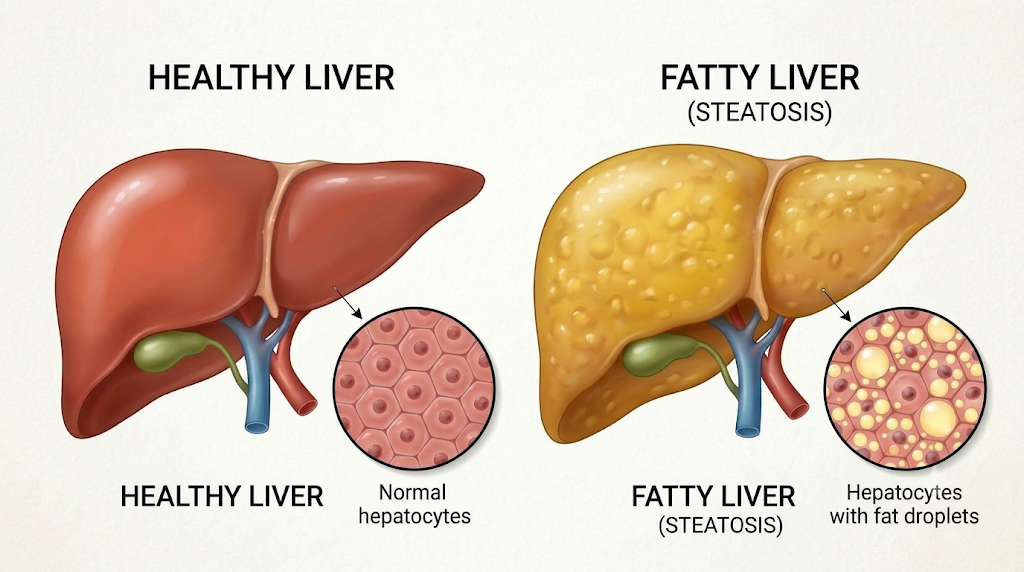
Fatty liver can range in severity. Some people have fat accumulation without significant liver damage, while others may develop inflammation, fibrosis or more advanced liver disease — which is why proper medical evaluation and follow-up are important.
Illustration of fat accumulation in the liver

What Is the Connection Between Fatty Liver and Weight Gain?

Fatty liver and excess body weight can be connected through several metabolic processes. Some common contributing factors include:

1
Excess Body Fat
Particularly around the abdomen, it can be associated with increased fat accumulation in the liver.
2
Insulin Resistance
Affects how the body regulates glucose and fat metabolism; commonly associated with fatty liver.
3
High Blood Sugar
Prediabetes and type 2 diabetes can increase the risk of metabolic liver disease.
4
Cholesterol & Triglycerides
Changes in blood lipid levels may occur alongside fatty liver and other metabolic conditions.
5
Lifestyle & Dietary Patterns
Dietary habits, inactivity, sleep patterns and other lifestyle factors may contribute.

Not everyone with fatty liver has obesity, and not everyone with obesity has fatty liver. Individual assessment is important.


The Connection

What Is the Connection Between Fatty Liver and Weight Gain?

Fatty liver and excess body weight can be connected through several metabolic processes. Some common contributing factors include:

1. Excess Body Fat
Excess body fat, particularly around the abdomen, can be associated with increased fat accumulation in the liver.
2. Insulin Resistance
Insulin resistance can affect how the body regulates glucose and fat metabolism. It is commonly associated with fatty liver and other metabolic concerns.
3. High Blood Sugar
Prediabetes and type 2 diabetes can increase the risk of metabolic liver disease.
4. Abnormal Cholesterol and Triglycerides
Changes in blood lipid levels may occur alongside fatty liver and other metabolic conditions.
5. Lifestyle and Dietary Patterns
Dietary habits, physical inactivity, sleep patterns and other lifestyle factors may contribute to metabolic health concerns.
Not everyone with fatty liver has obesity, and not everyone with obesity has fatty liver. Individual assessment is important.
Risk Factors

Signs and Risk Factors Associated With Fatty Liver

Fatty liver often does not cause noticeable symptoms in its early stages. Some people discover it through routine investigations. Possible associated risk factors include:

Overweight or obesityIncreased waist circumferenceInsulin resistancePrediabetesType 2 diabetesHigh triglyceridesAbnormal cholesterolHigh blood pressureMetabolic syndromeA family history of metabolic conditions

Fatigue or abdominal discomfort can occur for various reasons, but these symptoms alone cannot confirm fatty liver. If you have concerns, consult a qualified healthcare professional.

Diagnosis

How Is Fatty Liver Diagnosed?

A healthcare professional may recommend investigations based on your medical history, examination and risk factors. Depending on your situation, assessment may include:

  • Medical History: Review of weight history, medications, alcohol intake, existing conditions and lifestyle.
  • Blood Tests: Liver enzymes and other relevant metabolic tests may be recommended.
  • Ultrasound: Abdominal ultrasound may help identify fat accumulation in the liver.
  • Fibrosis Assessment: Additional non-invasive assessments may be considered to evaluate the possibility of liver scarring.
  • Metabolic Assessment: Blood glucose, HbA1c, lipid profile and other relevant markers may be reviewed.

Not every person requires every test. Your doctor can determine which investigations are appropriate.

Nutrition

What Is the Best Diet for Fatty Liver?

There is no single diet that works for everyone with fatty liver. A balanced eating pattern that supports metabolic health and sustainable weight management may be recommended. For many people, a practical nutrition plan can include:

Protein-Rich Foods
Protein supports muscle maintenance and overall nutritional health. Examples include:
  • Dal and legumes
  • Paneer
  • Curd
  • Eggs
  • Fish
  • Lean meat
Fibre-Rich Foods
Fibre-rich foods can support overall dietary quality. Examples include:
  • Vegetables
  • Fruits
  • Whole grains
  • Beans
  • Lentils
  • Nuts and seeds
Balanced Carbohydrates
Choose appropriate portions of foods such as:
  • Whole wheat roti
  • Brown or regular rice in suitable portions
  • Oats
  • Millets
  • Other minimally processed grains
Healthy Fats
Nuts, seeds and appropriate amounts of unsaturated fats can form part of a balanced eating pattern.
Foods to Limit
Depending on your health profile, your doctor or dietitian may advise limiting:
  • Sugar-sweetened beverages
  • Excess added sugar
  • Highly processed foods
  • Frequent deep-fried foods
  • Excessive calorie intake

Alcohol intake should also be discussed with your healthcare professional, particularly if you have liver disease. Alcohol-related liver conditions require their own assessment and management.

A fatty liver diet plan should be personalized to your nutritional needs, medical history and lifestyle.
Balanced Indian meal with vegetables, dal, whole grains and protein for fatty liver diet
Exercise

Does Exercise Help With Fatty Liver?

Physical activity can support metabolic health and may help reduce liver fat, even when weight changes are modest. Your activity plan may include:

Regular walkingBrisk walking, where appropriateCyclingSwimmingResistance trainingStrength exercisesOther enjoyable physical activities

A combination of aerobic activity and strength training may be useful for many adults. The right exercise routine depends on your fitness level, health conditions and physical limitations.

Metabolic Health

Fatty Liver, Insulin Resistance and Metabolic Health

Fatty liver is closely associated with several metabolic conditions.

  • Insulin Resistance: Insulin resistance can affect the body's ability to regulate blood sugar and may contribute to fat accumulation in the liver.
  • Type 2 Diabetes: People with type 2 diabetes have a higher risk of metabolic fatty liver disease and may need closer monitoring.
  • Abdominal Fat: Excess abdominal fat is associated with metabolic risk, including fatty liver.
  • High Triglycerides: Elevated triglycerides may occur alongside insulin resistance and other metabolic concerns.

This is why fatty liver management should not focus only on liver fat. It should also consider the person's overall metabolic health.

Explore our Insulin Resistance Weight Loss Program in India.

Personalized Program

Why a Personalized Weight Management Program Matters

A generic diet chart may not address the factors affecting your weight and metabolic health. A personalized program considers:

  • Your current weight and weight history
  • Medical conditions
  • Eating habits
  • Physical activity
  • Sleep and stress
  • Relevant blood test results
  • Medication history
  • Individual health goals

For someone with fatty liver, weight management may be one part of a broader health plan coordinated with appropriate medical care.

Who May Benefit

Who May Benefit From a Doctor-Led Weight Management Program?

You may consider professional weight-management support if:

  • You have fatty liver along with excess body weight.
  • You have been diagnosed with insulin resistance.
  • You have prediabetes or type 2 diabetes.
  • You have difficulty managing your weight through repeated diets.
  • You have increased waist circumference.
  • You want a structured nutrition and lifestyle plan.
  • You want medical guidance for sustainable weight management.
  • You need support managing weight alongside other metabolic concerns.

A consultation can help determine whether a weight-management program is appropriate for your situation.

Why Inteledoc

How Inteledoc Supports Doctor-Led Weight Management

At Inteledoc, our approach focuses on personalized, medically informed weight management. Depending on your individual needs, the program may include:

Step 1
Doctor-Led Health Assessment
Your medical history, weight history, lifestyle and relevant health concerns are reviewed.
Step 2
Personalized Nutrition Planning
A nutrition strategy is developed around your food preferences, nutritional requirements and health goals.
Step 3
Metabolic Health Considerations
Relevant metabolic concerns, such as insulin resistance and blood sugar changes, may be considered as part of your overall assessment.
Step 4
Lifestyle Guidance
Physical activity, sleep and sustainable daily habits are considered as part of long-term weight management.
Step 5
Medical Treatment When Appropriate
Prescription weight-management treatments may be considered by a qualified doctor when clinically appropriate. They are not suitable for everyone and are not a substitute for fatty liver evaluation or specialist liver care.
Step 6
Progress Monitoring
Your progress can be reviewed over time, allowing your plan to be adjusted according to your response and health needs.
At Inteledoc, the aim is to support your weight-management journey with a personalized and doctor-led approach.
Explore Our Doctor-Led Weight Loss Program
Inteledoc doctor consulting a patient online about weight and metabolic health
Get Started

Start With a More Complete Approach to Metabolic Health

Fatty liver is not simply a matter of eating less or exercising more. It can be associated with several metabolic and lifestyle factors that deserve attention.

A personalized approach can help you understand your health, make realistic changes and work towards sustainable weight management.

At Inteledoc, we focus on safe, scientific and personalized weight management with medical oversight.

Take the Next Step With Inteledoc

If you are managing excess weight alongside fatty liver or other metabolic health concerns, speak with our team about a personalized approach.

Doctor-Led. Personalized. Science-Backed.
FAQ

Frequently Asked Questions

1. Can losing weight help reduce fatty liver?

For people with excess weight, gradual and sustained weight loss can help reduce liver fat and improve certain metabolic health markers. The appropriate goal depends on individual health and should be discussed with a healthcare professional.

2. What is the best diet for fatty liver in India?

A balanced eating pattern containing vegetables, fruits, whole grains, legumes, suitable protein sources and healthy fats may support metabolic health. A diet plan should be personalized rather than based on a universal food list.

3. Can fatty liver be reversed?

In some people, liver fat and associated metabolic changes can improve with appropriate lifestyle changes and medical management. The possibility of improvement depends on the stage of liver disease and individual circumstances.

4. Does fatty liver cause weight gain?

Fatty liver does not necessarily cause weight gain. However, both conditions can share underlying metabolic risk factors, such as insulin resistance and excess body fat.

5. Can walking help with fatty liver?

Regular walking can support physical activity goals and metabolic health. It may contribute to improvements in liver fat, especially when combined with an appropriate nutrition and weight-management plan.

6. Is fatty liver related to insulin resistance?

Yes. Insulin resistance is commonly associated with metabolic fatty liver disease. Both conditions may occur together and should be considered during a person's overall health assessment.

7. Can I have fatty liver without obesity?

Yes. Fatty liver can occur in people who are not classified as having obesity. Other metabolic, genetic and lifestyle factors may contribute.

8. Which tests are used to check for fatty liver?

Depending on your medical history, a doctor may recommend liver blood tests, ultrasound, metabolic blood tests and non-invasive fibrosis assessments.

9. Do weight-loss medicines treat fatty liver?

Some prescription medicines used for obesity or related metabolic conditions may have benefits for certain patients. However, medication choice depends on individual clinical factors and should be made by a qualified doctor. Not every weight-loss medicine is a treatment for fatty liver.

10. Does Inteledoc provide fatty liver treatment?

Inteledoc focuses on doctor-led weight management and metabolic health support. If you have fatty liver, you should also receive appropriate medical evaluation and liver-specific care from a qualified healthcare professional.

Medical Disclaimer

This page is intended for general educational purposes only and does not replace medical advice, diagnosis or treatment. Fatty liver requires appropriate medical evaluation. Individual treatment and weight-management recommendations vary according to health status and disease severity. Do not start, stop or change prescription medicines without consulting a qualified healthcare professional.

x